The concept of truss systems is widely used not only in bridges and building structures, but also in steel joist floor systems. This article examines the structural behavior of truss action in steel joists, comparing open-web joists (Kormit type) with joists without concrete infill in the web (NIAZIT system).
What Is a Truss?
A truss is a structural system composed of straight members connected to form triangular units. Each member is designed to resist axial tension or compression only. In ideal truss behavior:
Members are free of bending moments and shear forces
Connections are modeled as pinned joints
The overall system behaves as a flexural load-carrying structure
Truss Behavior in Open-Web (Kormit) Joists
In open-web joists, the web member is formed as a continuous zigzag element. This configuration:
Does not form perfect triangular units
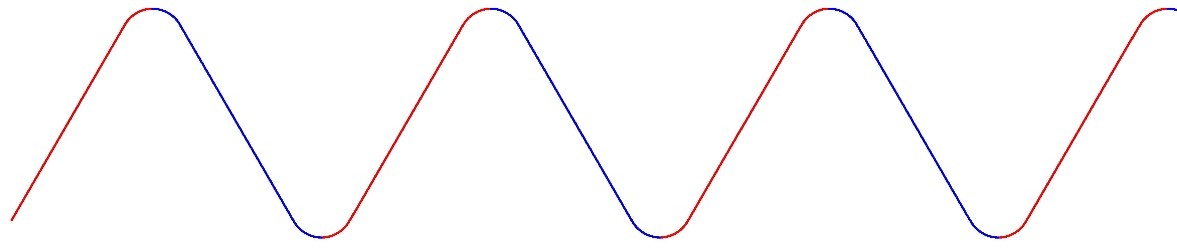
Experiences alternating tension and compression within a single continuous member
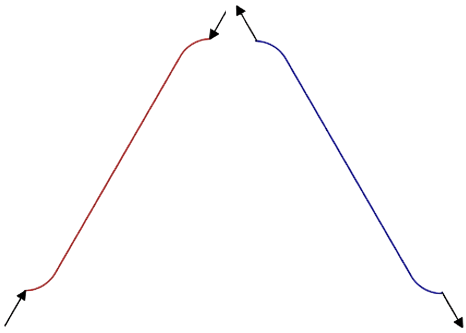
Results in combined axial stresses in curved regions
Therefore, defining this system as a true truss is structurally ambiguous. Concrete infill in the web helps restrain deformation of the zigzag member; however, its effectiveness depends heavily on proper concrete quality, vibration, and curing.
Under dynamic loads such as seismic actions, poor concrete performance may lead to progressive long-term deflection, as each curved segment is simultaneously subjected to tension and compression.
🔴 Compression zone
🔵 Tension zone
Simultaneous tension and compression in continuous curved web members
Continuous zigzag web reinforcement (Kormit joist)
Truss Behavior in Joists Without Concrete Web (NIAZIT)
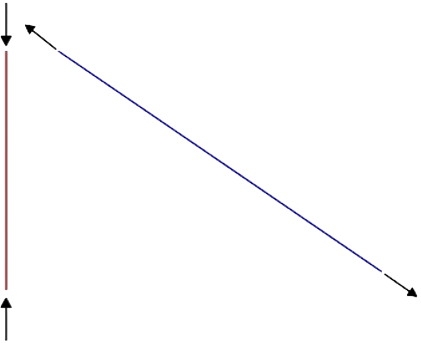
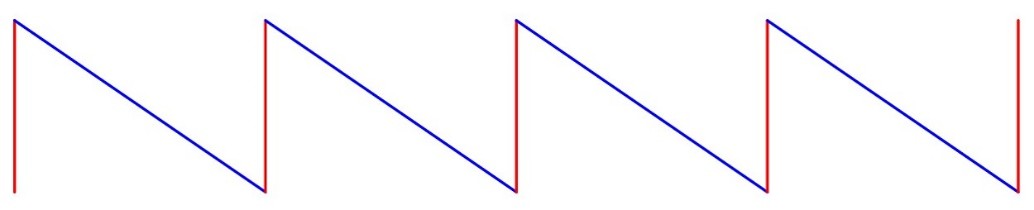
In NIAZIT joists, the web consists of independent vertical and diagonal members:
Vertical members resist compression
Diagonal members resist tension
This configuration creates true triangular truss geometry, where: