Patented Open Web Steel Joist (OWSJ) Roof System – A New Structural Generation
✨ Comprehensive Comparison of NIAZIT Joist and Chromite Joist ✨
This article presents a code-oriented and engineering-based comparison between the NIAZIT Open Web Steel Joist (OWSJ) system and conventional Chromite open web joists, focusing on concrete web elimination, 30–40% reduction in concrete consumption, slab dead load adjustment for ETABS modeling, support connections, and span capacity, in accordance with ISIRI 12977 and SJI 200-2015.
🔹 Top Chord Performance
🔸 Chromite Joist (Open Web Steel Joist)
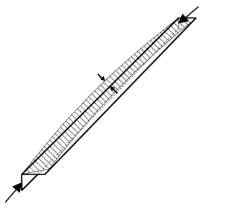
In Chromite joists, the top chord is typically made of angle sections. Since angle sections have a single-axis radius of gyration, they are highly susceptible to lateral buckling under compressive forces, particularly during concrete casting without shoring.
Important Note: According to Clause 4-4 of Iranian Standard No. 12977, joists longer than 6.5 meters must use double symmetrical angles for the top chord. Failure to comply with this requirement is one of the main reasons for slab collapse during concrete pouring.
🔸 NIAZIT Joist (Joist Without Concrete Web)
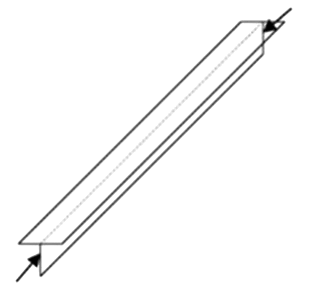
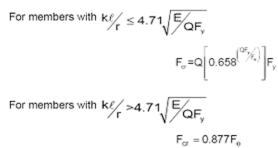
In NIAZIT joists, the top chord is designed using a T-section from the beginning. Due to its symmetrical geometry and biaxial radius of gyration, the T-section demonstrates superior resistance to lateral buckling during construction and concrete placement.
The top chord can be accurately designed for all loading conditions:
Composite
Non-composite
With shoring
Without shoring
Non-composite condition refers to scenarios where the joist alone carries all dead and live loads without relying on concrete.
🔹 Web Member Performance (Structural Behavior)
🔸 Chromite Joist
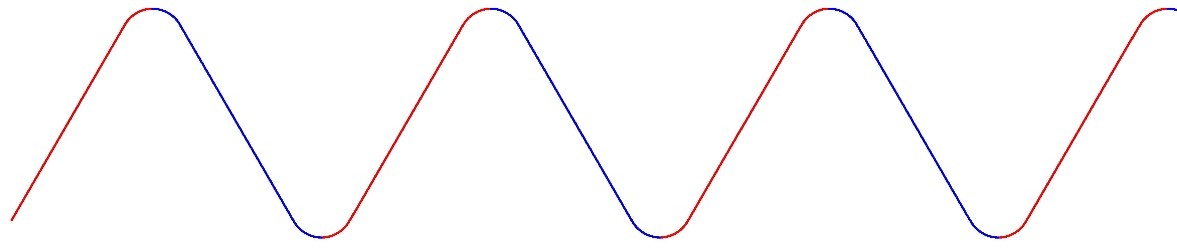
The web system consists of continuous zigzag rebars acting alternately in tension and compression. Each bend in the zigzag is simultaneously subjected to tensile and compressive stresses, resulting in stress concentration and long-term deflection, especially during and after concrete casting.
🔴 compression area
🔵 tenshion area area
🔸 NIAZIT Joist
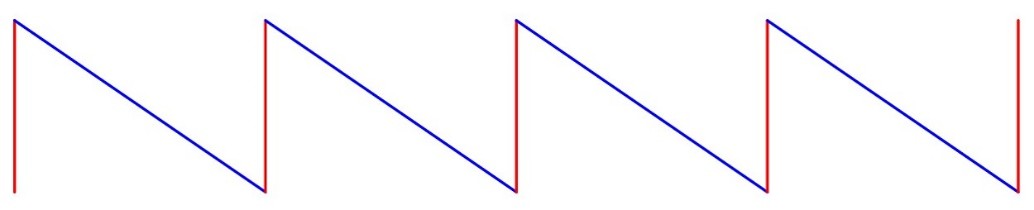
The web members are composed of separate vertical and diagonal steel elements, each specifically designed:
Vertical members resist compression
Diagonal members resist tension
The absence of bends and continuity eliminates stress concentration and allows:
Independent design of each member
Targeted strengthening where required
Improved structural efficiency
🔴 compression area
🔵 tenshion area area
🔹 Web Member Design & Analysis
🔸 Chromite Joist
After concrete hardening, the zigzag rebar is designed primarily based on shear control according to Clause 2-2-2-5 of Publication No. 543, requiring at least 25% of the support reaction. Due to continuity, local strengthening is not possible without increasing the entire rebar size.
🔸 NIAZIT Joist
Each web member can be analyzed and designed individually, allowing precise structural optimization. Local reinforcement is possible under special loading conditions without unnecessary material increase.
🔹 Concrete Web Evaluation
🔸 Chromite Joist
Concrete infill in the web often suffers from poor vibration and compaction, leading to reduced compressive strength. Under seismic excitation, cracked or poorly bonded concrete web significantly loses effectiveness, causing long-term slab deflection.
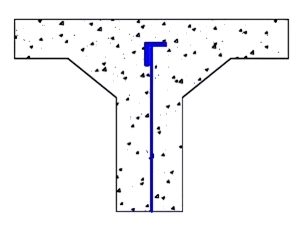
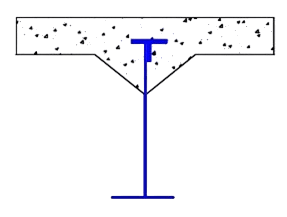
Since NIAZIT joists are designed without concrete in the web, there is a substantial difference compared to Chromite open web joists, both in terms of slab dead load and overall construction cost.
Concrete volume in Chromite open web joists
minus
Concrete volume in NIAZIT joists without concrete web
equals
Net concrete consumption difference
**Sample Table: Reduction of Slab Dead Load for ETABS Modeling
Concrete Unit Weight × (Joist Spacing ÷ Haunch Concrete Area) = Dead Load Difference per Square Meter of Slab
Table: Reduction in Haunch Concrete Consumption Cost in NIAZIT Slab Compared to Chromite Slab
(per 1,000 m² of Net Slab Area)
Open Web Joist Arrangement (Chromite)
Joist Spacing (cm)
Reduction in Concrete Volume in NIAZIT Slab (m³)
Single Joist
50
40
Double Joist
50
80
Single Joist
70
29
Double Joist
70
58
Cost Difference Formula
Daily Concrete Unit Price × (Joist Spacing ÷ Haunch Concrete Area) = Concrete Cost Difference per Square Meter of Slab
Engineering Note (ETABS Application)
The above values represent the reduction in slab dead load resulting from the elimination of haunch concrete in the NIAZIT Joist System compared to the conventional Chromite open web joist system. These values may be directly applied in ETABS as a negative dead load adjustment (ΔDL) for slab load definitions.
🔹 Joist Connections and End Fixity at Supports
🔸 Chromite Joist
These connection details often result in limited fixity and reduced structural reliability, especially under construction-stage and seismic loading.
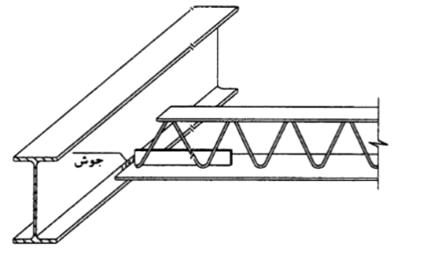
In steel frame structures, the first zigzag web member of a Chromite joist is subjected to high force demand and therefore requires significant strengthening.
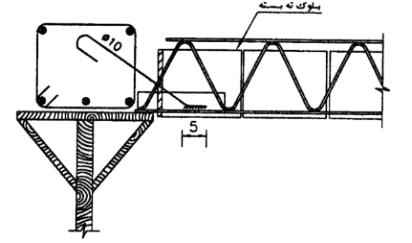
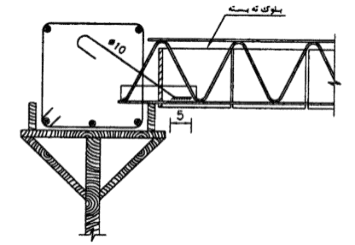
Chromite joist connection in reinforced concrete frame structures
In unhaunched conditions, the connection capacity is generally insufficient
Limited end fixity at supports
Reduced reliability under construction and seismic loads
🔸 NIAZIT Joist
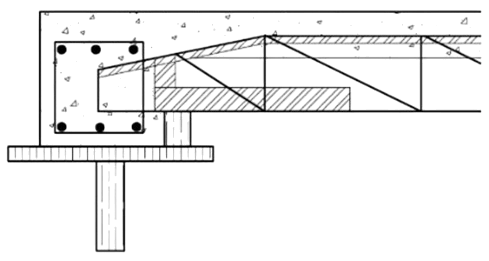
In the NIAZIT joist system, connections are designed as structural load-resisting details.
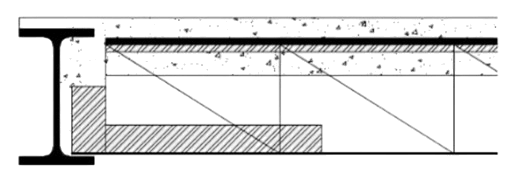
NIAZIT joist connection in reinforced concrete frame structures
🔹 Weight, Span & Execution
🔸 Chromite Joist
For spans above 7–8 meters:
Double joists are required
Continuous stiffening plates must be used
Double-angle top chords are mandatory
Any deviation from these requirements voids compliance with Standard 12977.
🔸 NIAZIT Joist
Designed in accordance with SJI 200-2015, Clause 5.5.2.1:
Spans up to 18.3 meters are permitted
Longer spans achievable with bolted connections
No need for double joists
Reinforcement applied only where structurally required
Optimized joist spacing:
Residential spans up to 9 m → 70 cm
Longer spans → 50 cm
🔹 Final Conclusion
For short spans (≈4 m), the weight difference between Chromite and NIAZIT joists is minimal. However, in medium and long spans, NIAZIT joists offer superior performance in terms of: